

Missing the Point? Neo-Impressionism Beyond Pointillism
This is a longer essay post. At the end, I’ve added a short note from the week, a classroom coda and 3-page resource download for paid subscribers who’d like to take this thinking into a lesson.

Pointillism and Neo-Impressionism are not usually at the top of my list when it comes to movements I’m most drawn to or instinctively excited by. But over the New Year I visited Radical Harmony at the National Gallery, an exhibition drawn from one of the most important collections of Neo-Impressionist painting in the world, and it shifted my thinking.
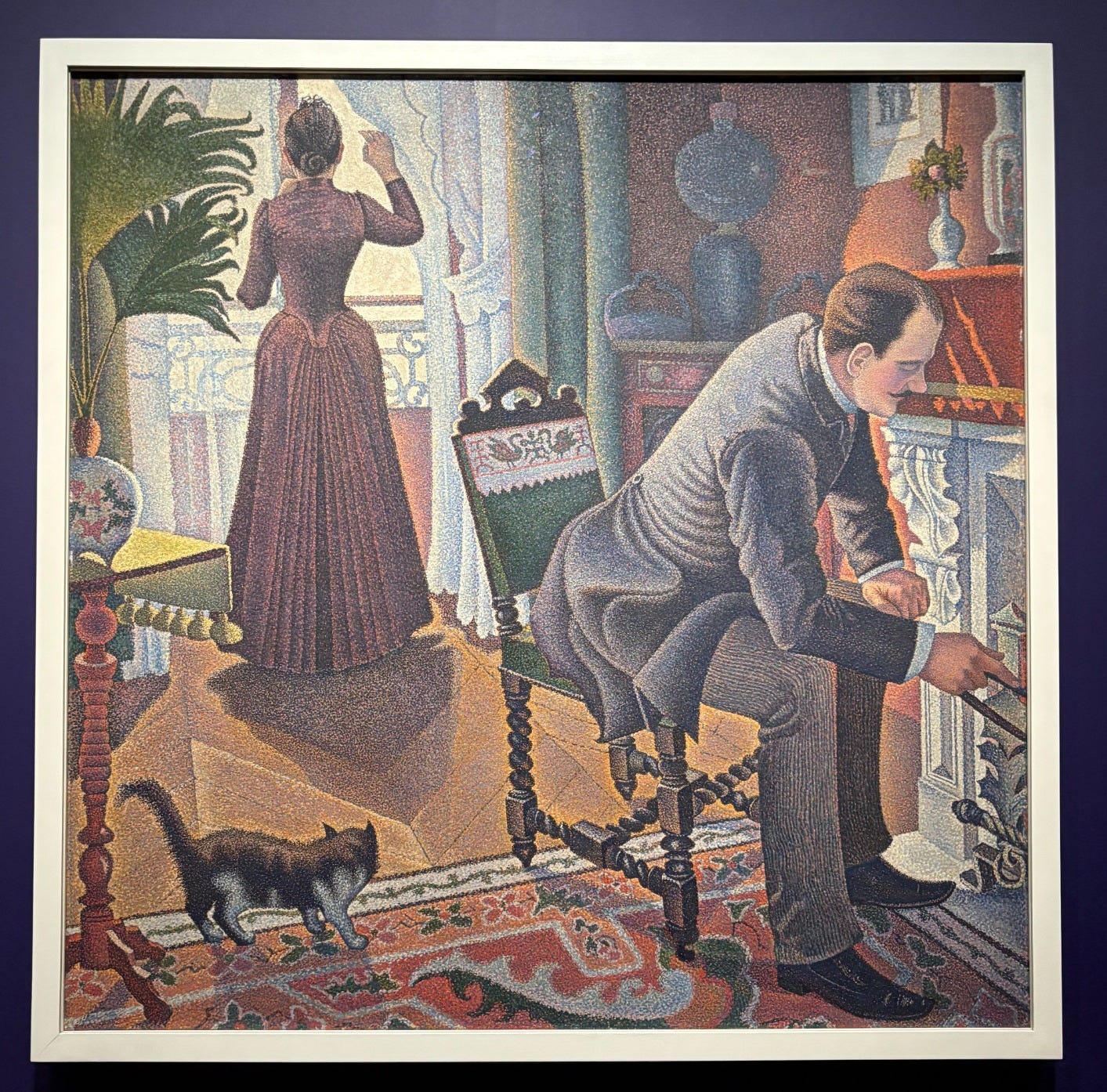
Most of the works on display were collected by Helene Kröller-Müller, one of the earliest and most significant women art patrons of the twentieth century. With the explicit aim of making art publicly accessible, she assembled an extraordinary group of Neo-Impressionist paintings, now housed in the Kröller-Müller Museum in the Netherlands, which she founded. Seeing these works together made clear just how deliberate, structured, and materially focused Neo-Impressionist painting really is.
What struck me most was not the technique we usually associate with the movement (the dots) but the treatment of surface. How paint accumulates, repeats, and insists on being seen. That realisation is what prompted this week’s exploration.
So bear with me as I put Neo-Impressionism back into context. I’ve included a little gallery of the works I took pictures of below, but further down there will be a close reading of one of my favourite paintings, Van Gogh’s The Sower, which was surprisingly included in the exhibition and was a real highlight. Van Gogh’s work always demands to be seen in person, and ideally up close. This show was a reminder of why.



Neo-Impressionism: Context, Origins, and Intent
Neo-Impressionism emerged in France in the mid-1880s, at a moment when artists were increasingly questioning not just what painting should show, but how it should be made. This was a period shaped by rapid industrialisation, expanding cities, and growing confidence in science as a way to understand and organise the modern world. Ideas about perception, optics, and rational systems circulated widely, influencing everything from urban planning to education and painting was no exception.
Impressionism had already challenged academic traditions by rejecting polished surfaces and historical subjects. Its painters embraced visible brushwork, modern life, and fleeting effects of light and atmosphere. But Impressionism was also associated with speed and immediacy. Paintings often feel quickly made, responsive to a particular moment or sensory impression.
Neo-Impressionism developed partly in response to this. Rather than privileging spontaneity, Neo-Impressionist artists sought structure, order, and control. They were interested in slowing painting down and subjecting it to a set of principles. The movement is most closely associated with Georges Seurat (1859-1891) and Paul Signac (1863-1935), both of whom believed that painting could be approached systematically, drawing on contemporary theories of colour and visual perception.
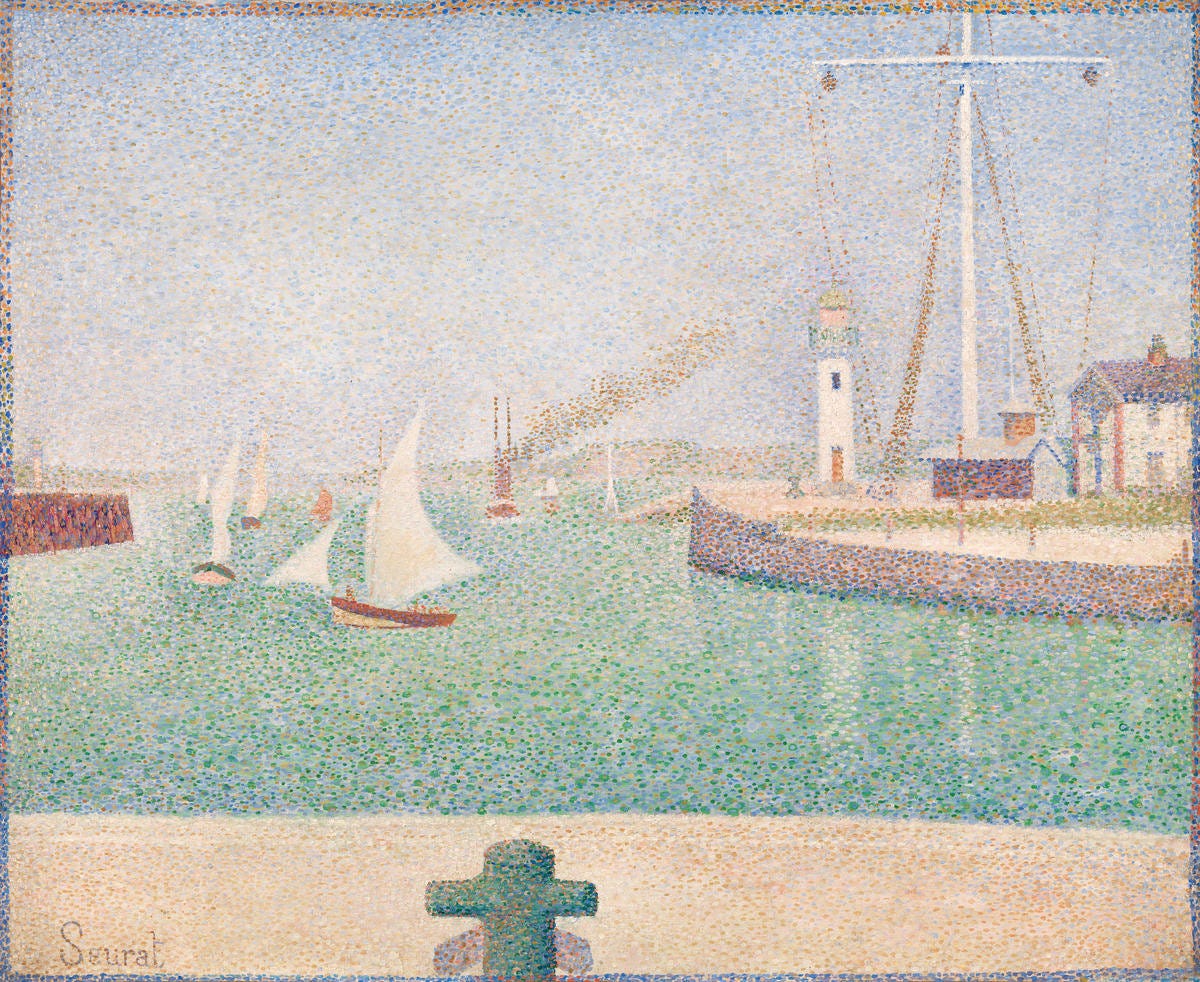
A useful way to see what Neo-Impressionism was trying to do is to look closely at Georges Seurat’s The Port of Honfleur (1886). At first glance, the painting appears calm and restrained: a coastal harbour rendered with balance and clarity. But as you move closer, the image breaks apart into countless small touches of colour. Blues, greens, and oranges sit side by side rather than blending smoothly, forcing the viewer to actively participate in the image’s completion.
What matters here is not the presence of dots, but the organisation of the surface. Seurat works evenly across the canvas, refusing expressive flourishes or areas of visual rest. The water, sky, and boats are all constructed through repetition and control. Up close, the surface feels fragmented; from a distance, it coheres. The painting continually reminds us that what we are seeing is a made object rather than a spontaneous record of visual experience.
So at the heart of Neo-Impressionism was the idea that colour did not need to be blended smoothly on the palette. Instead, artists could apply small units of pure colour side by side, allowing them to mix optically in the viewer’s eye. This method aimed to produce greater clarity, luminosity, and balance. It was also a way of asserting control over the painted surface: each mark placed deliberately, each colour relationship carefully considered.
It is from this practice that the term pointillism emerged. Historically, pointillism referred to the application of paint in small, separated units, often dots, but also short strokes or touches. Crucially, the dot itself was not the goal. What mattered was division: dividing colour, dividing the surface, and organising perception through repetition.
Over time, pointillism became the shorthand through which Neo-Impressionism was taught and understood. Dots are easy to recognise and easy to explain. But this emphasis on technique has tended to obscure the movement’s deeper significance. Neo-Impressionism was not simply an experiment in how the eye mixes colour; it was a sustained investigation into how paintings are constructed.
Neo-Impressionist canvases are worked evenly across their entire surface. There are no areas of rest or improvisation. Up close, images fragment into individual marks; from a distance, they cohere. Viewers are constantly made aware of the relationship between material surface and visual effect. The painting no longer functions as a transparent window onto the world, but as a built object whose meaning emerges through accumulation and structure.
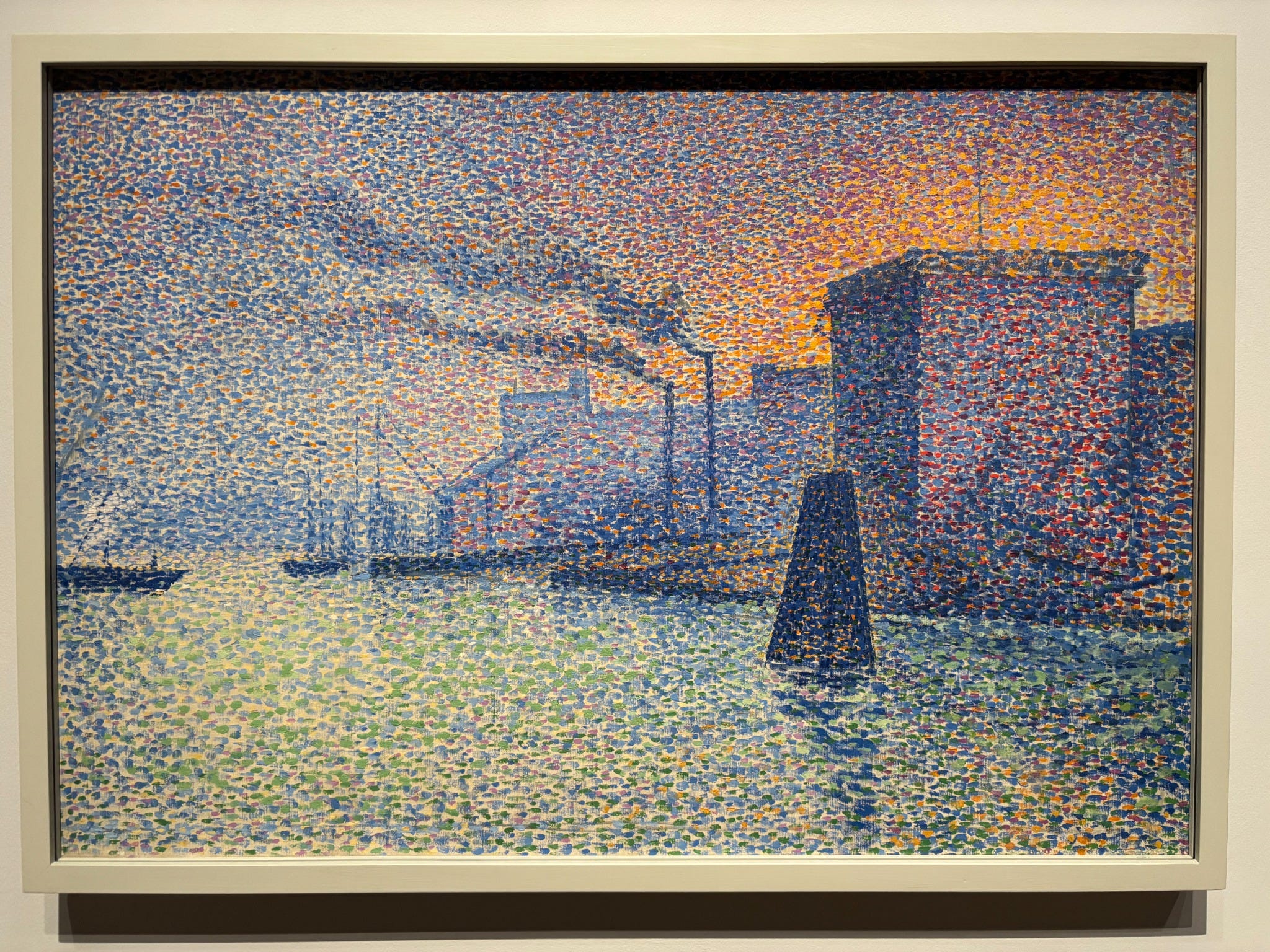
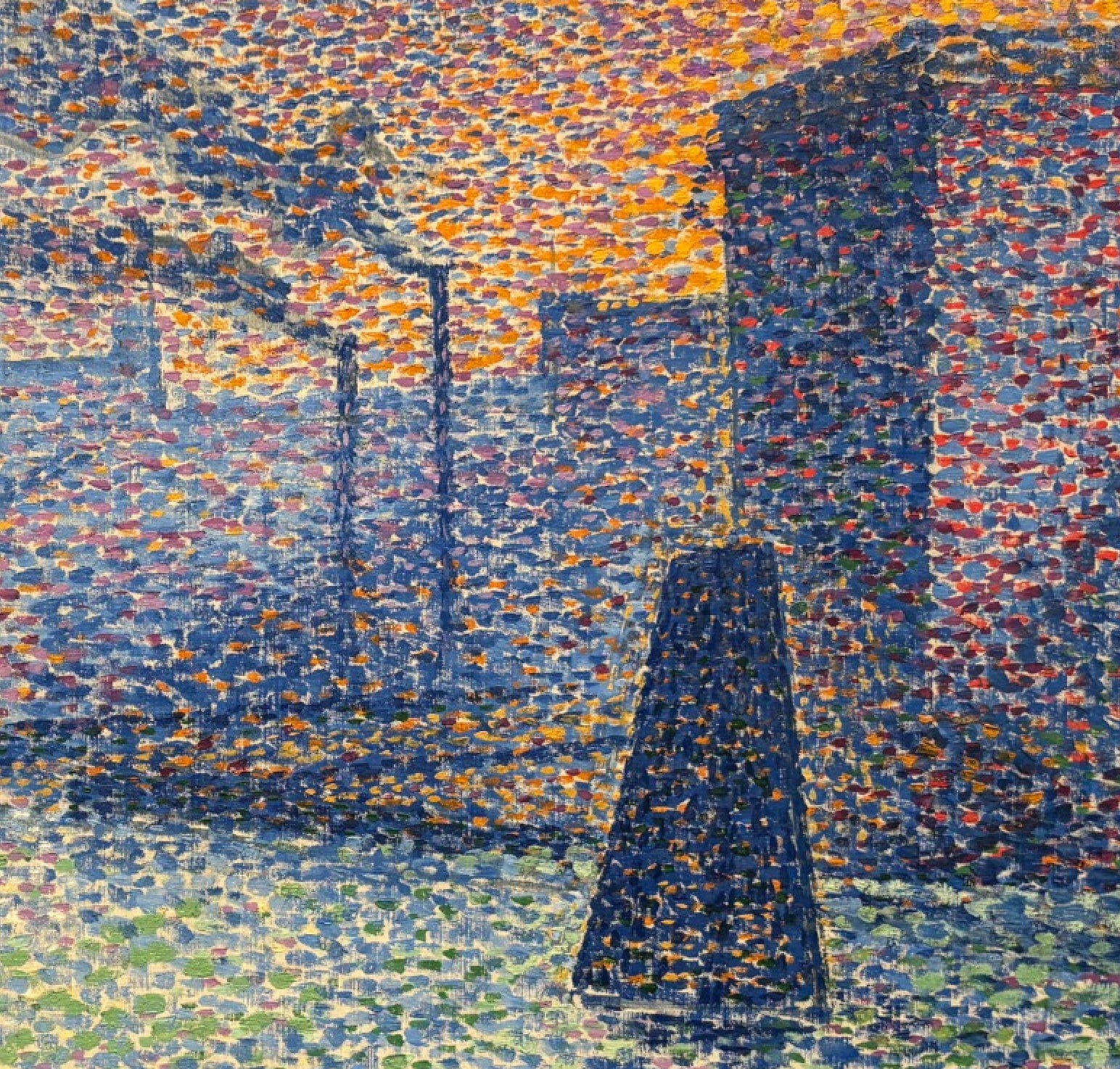
This attention to surface, rather than pointillism as a visual shorthand, is I think what gives Neo-Impressionism its lasting importance. It marks a shift in modern painting, away from immediacy and toward deliberation, and sets the stage for later artists who would push surface even further, including Vincent van Gogh.

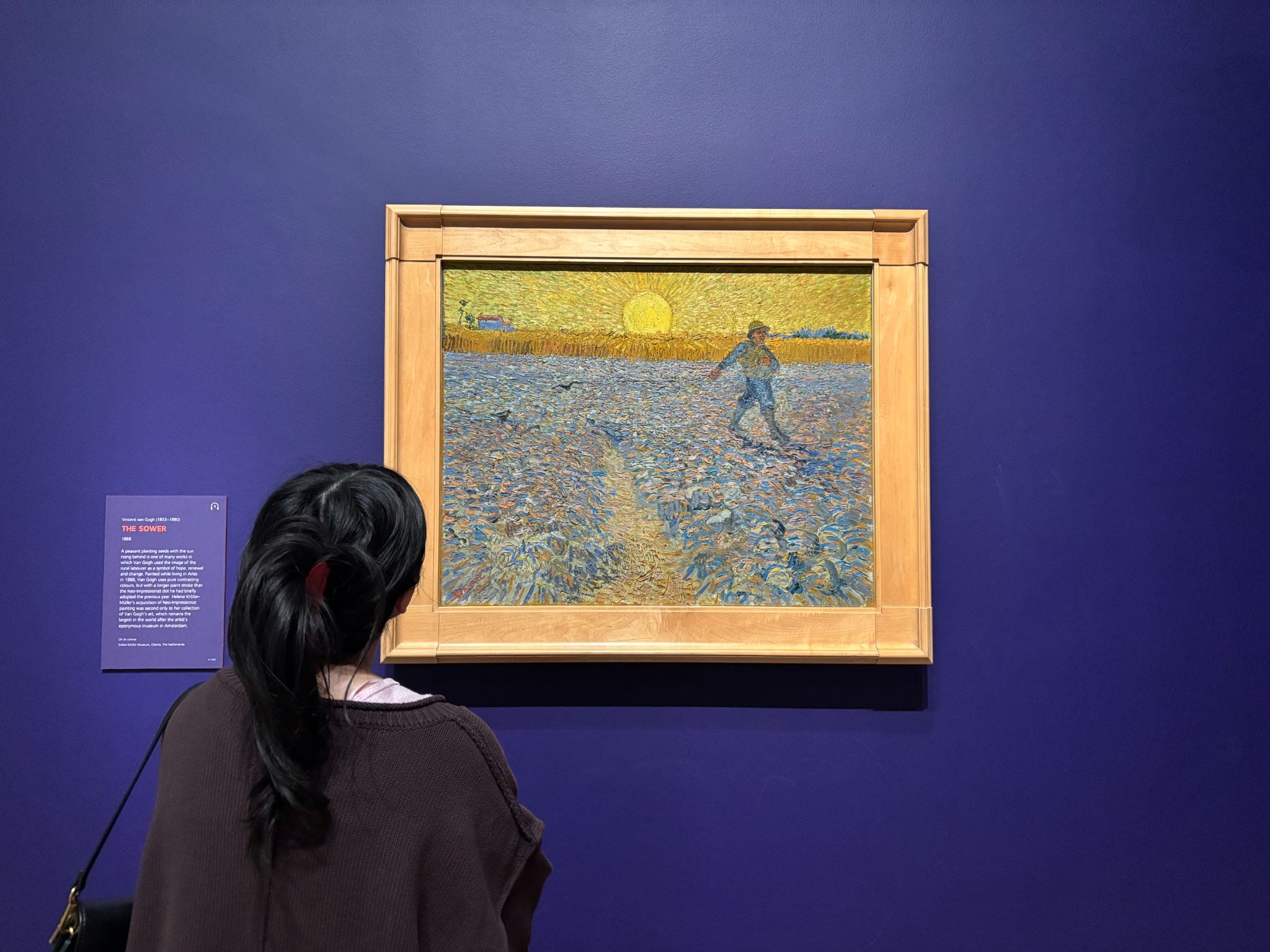
The figure of the sower has a long history in European art. Most famously, it appears in the work of Jean-François Millet, whose mid-nineteenth-century paintings of rural labour framed the sower as a symbol of endurance, dignity, and cyclical time.
Van Gogh knew these images well and admired them deeply. But when he returns to the subject in the late 1880s, the meaning of the sower shifts. What changes most dramatically is not the motif itself, but the surface through which it is rendered.
By the time Van Gogh paints The Sower in 1888, he has already encountered Neo-Impressionism firsthand. During his time in Paris, he saw works by Seurat and Signac and absorbed their insistence on deliberate mark-making and structured colour. He did not adopt their method wholesale, but he did take from them a crucial lesson: that a painting is built, not merely brushed.
This becomes central to how The Sower works.
Close Reading: Van Gogh’s The Sower
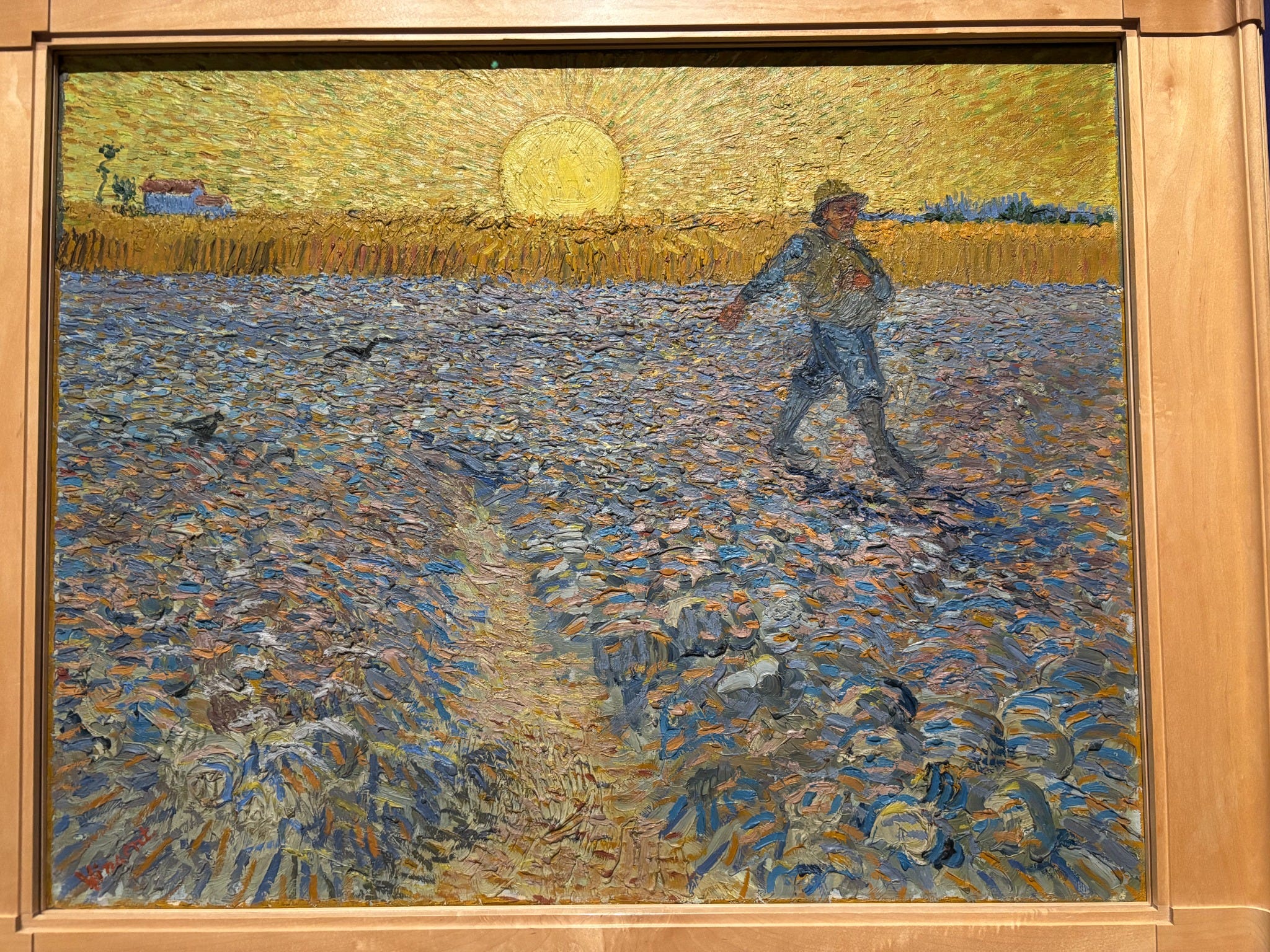
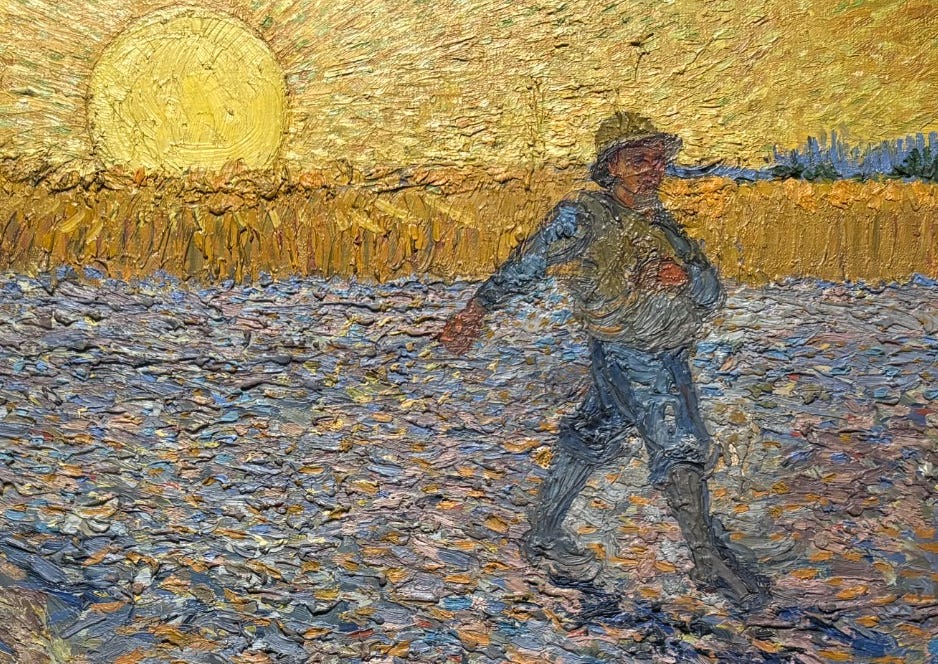
Your eye is first drawn to the blazing sun, set low against the horizon, its flat disc radiating outward into the surrounding sky. Rather than dissolving into atmospheric haze, the sky is built from short, directional strokes that push colour across the surface. Yellows press against blues and violets, creating a shallow, vibrating space. The sun does not recede into distance; it sits on the surface of the canvas, anchoring the composition and establishing a rhythm that carries downward into the field.
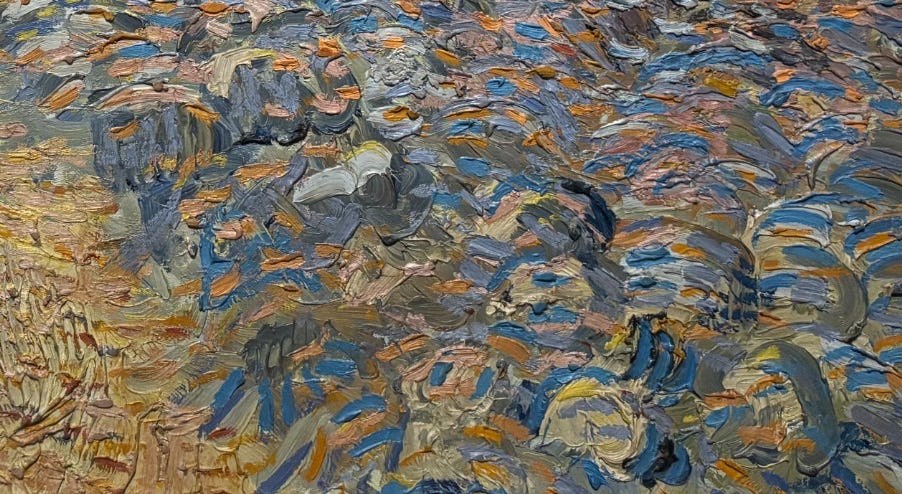
From there, the eye moves across the earth itself, which dominates the painting. The ground is constructed from dense, repeated marks that tilt and pull across the canvas, refusing smooth depth. These strokes echo the motion of the sower’s arm as he scatters seed, linking figure and field through repetition. The surface feels worked and resistant, its energy held in tension rather than resolved. Meaning emerges not from symbolism alone, but from the physical labour embedded in the paint: the painting does not merely depict sowing it actually enacts it through each stroke of paint.
What The Sower makes clear is that surface can carry narrative and meaning independently of subject matter. The story of labour, renewal, and endurance is not conveyed primarily through symbolism or iconography. It is conveyed through how the painting is made.
The earth feels heavy because the surface is dense. The labour feels relentless because the marks are relentless. The painting does not illustrate work; it performs it. This is a crucial shift. Earlier realist paintings asked viewers to recognise labour as a subject. Van Gogh asks viewers to experience it materially, through the act of looking. This is only possible because Neo-Impressionism had already insisted that surface mattered, that repetition, accumulation, and structure could be meaningful. Van Gogh inherits this lesson and transforms it into something more visceral.

After the Sower: Jan Toorop and the Extended Neo-Impressionist Surface
A useful comparison can be made with In the Dunes (near Domburg) (1903) by Jan Toorop, painted more than a decade after Van Gogh’s The Sower. At first glance, Toorop’s scene appears calmer and more decorative: a seated figure embedded within a rolling landscape, rendered almost entirely through small, evenly applied marks. Yet this apparent quietness is deceptive. Like Van Gogh, Toorop treats the landscape not as a neutral backdrop but as a continuous, activated surface.
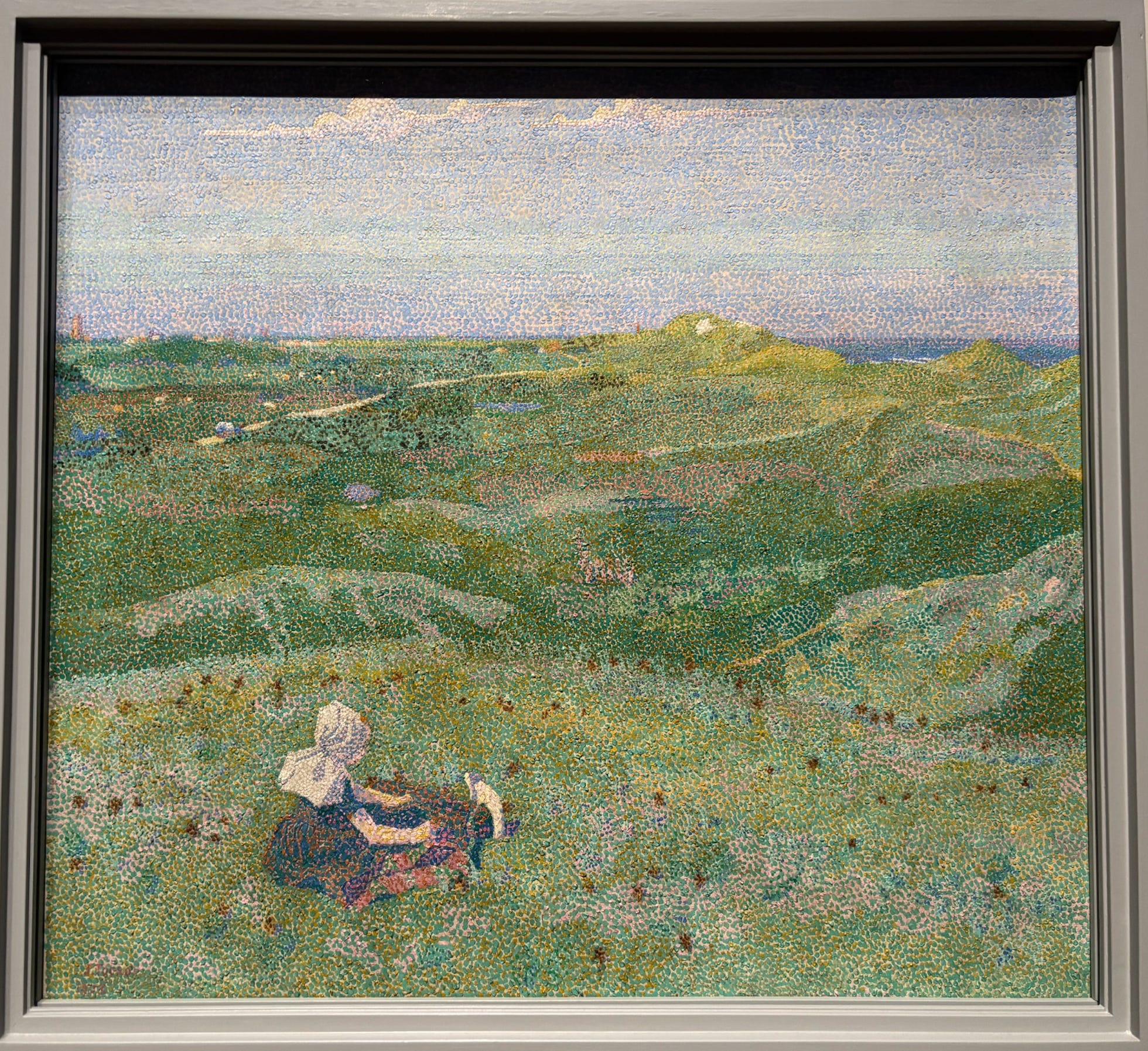
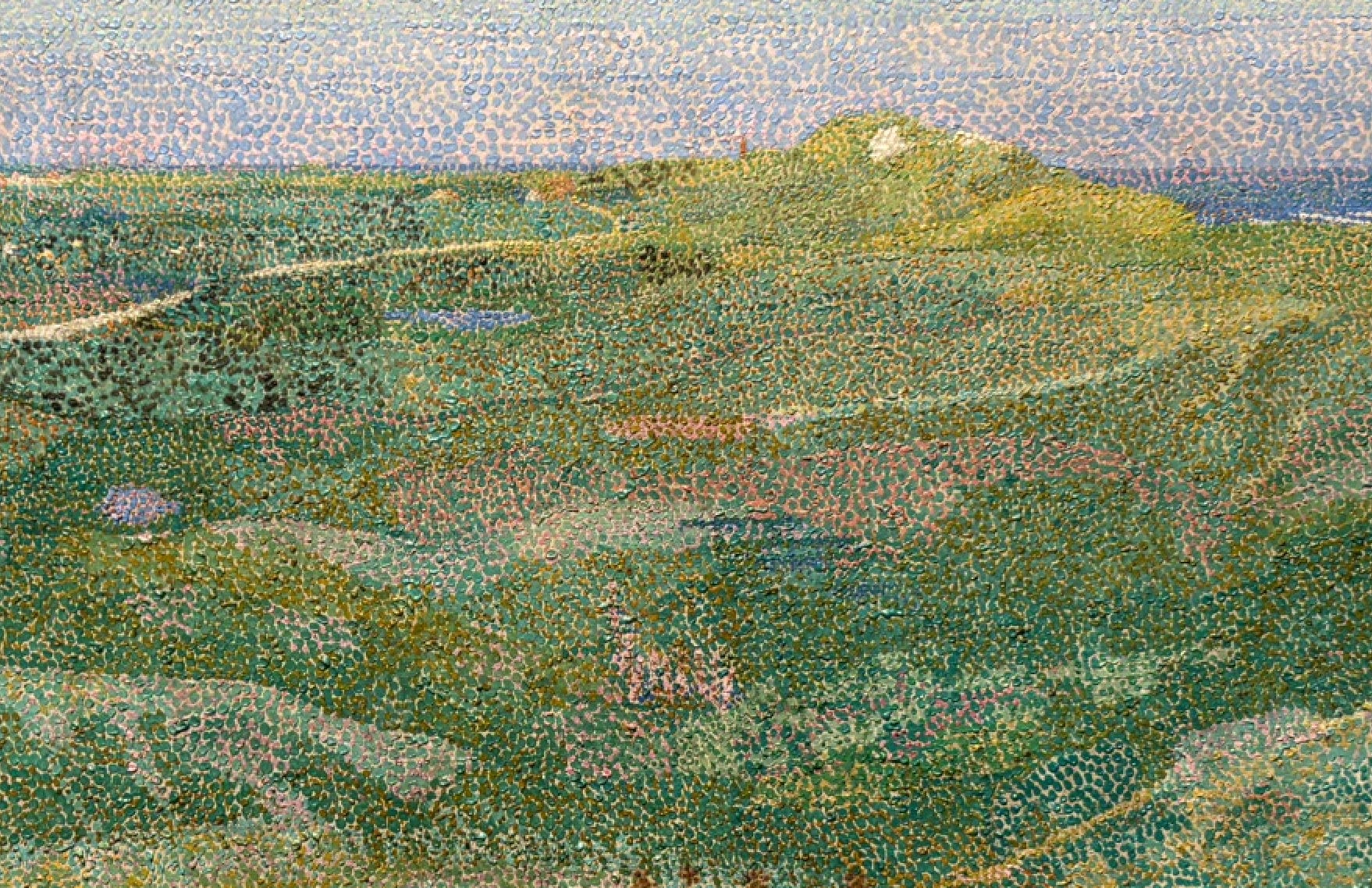
In Toorop’s painting, figure and ground are barely distinguished by contour. Instead, both dissolve into the same patterned field of colour. The dunes are not modelled through light and shadow but constructed through repetition and rhythm. This flattening of space where surface takes precedence over depth signals how Neo-Impressionist ideas about divided colour and structured mark-making persisted into the twentieth century, shaping Symbolist, decorative, and early modern approaches to painting. What began as an investigation into optical harmony becomes, in Toorop’s hands, a way of thinking about painting as pattern, continuity, and surface logic, a legacy that would inform everything from Post-Impressionism to abstraction.
Neo-Impressionism and the Question of Surface
Neo-Impressionism matters not because of its dots, but because it marked a shift in how artists understood the painted surface. By insisting on repetition, accumulation, and structure, Neo-Impressionist painters foregrounded the fact that paintings are built objects rather than transparent windows onto the world. This attention to surface shaped later developments across modern art, from Van Gogh’s visceral mark-making to the patterned continuity of artists like Jan Toorop. What emerges is not a single style, but a way of thinking about how meaning is carried through material decisions.
